Car Diagnostic Test: Importance and Benefits

Detailed information about the technology of car diagnostic test and the data provided to the vehicle owner.

A modern car is no longer just an engine, a gearbox, and a few mechanical assemblies. Nearly every important system — engine operation, transmission, ABS, stability control, airbags, air conditioning, battery management, sensors, and many auxiliary modules — is tied together electronically. That is why when Check Engine, ABS, Airbag, or another warning light comes on, the exact cause often cannot be identified by guesswork or by a visual inspection alone.

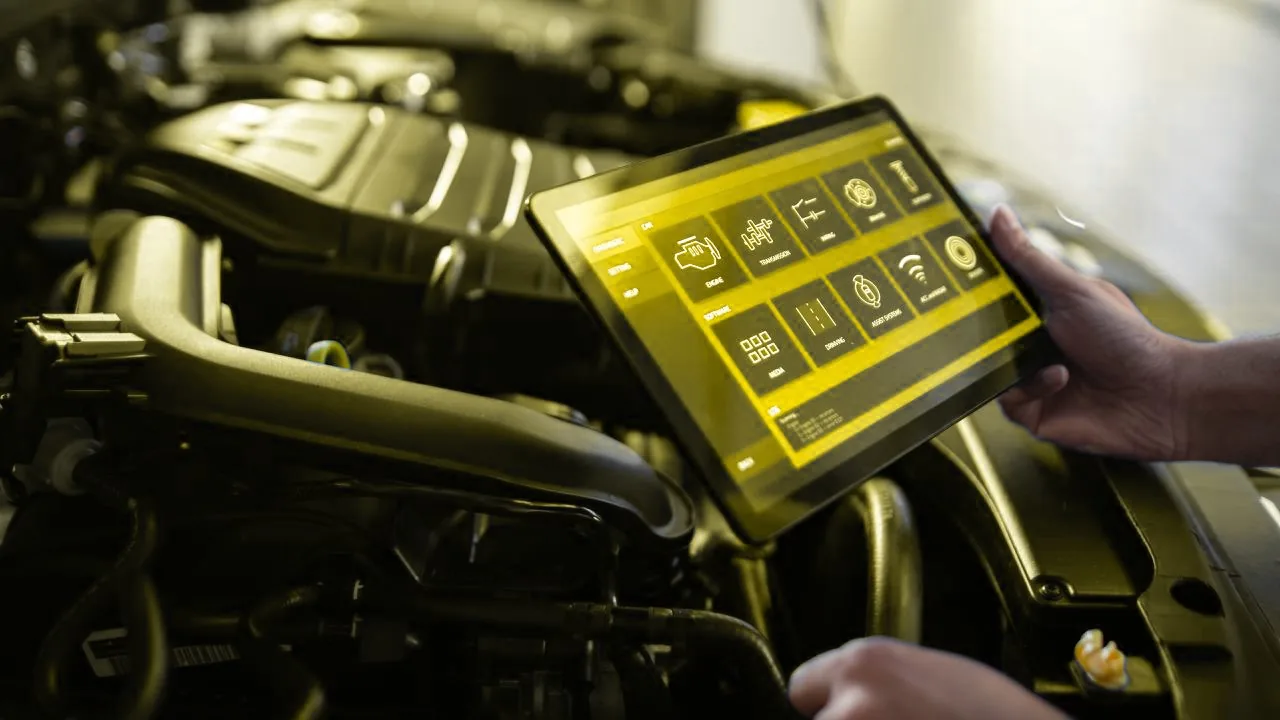
That is where computer diagnostics comes in. It is a process in which a specialist connects to the car’s control modules using a scanner and software, reads fault codes, checks live parameters, and analyzes where the real problem may be. Properly performed diagnostics is not just about “reading a code.” Its goal is to show the real picture: which system registered the fault, how active it is, whether historical errors remain in memory, what the sensors are showing, and in what direction further checks should go.


What Computer Diagnostics Means in Simple Terms

Put simply, computer diagnostics is a “conversation” with the car’s electronic systems. The onboard computer constantly monitors the operation of different components. When one of the parameters goes outside the normal range, the system stores that information in the form of a fault code. During diagnostics, those codes are read, and the technician sees where the root-cause search should begin.

For example, Check Engine does not always mean a major failure or an engine overhaul. Sometimes the cause may be an incorrect sensor reading, an ignition issue, a problem with airflow, an air-fuel mixture fault, a catalytic converter-related error, or even a poor electrical contact. The same applies to other indicators: an ABS light does not by itself say which exact part must be replaced, but diagnostics gives the correct direction.

What Diagnostics Shows in Practice

A well-performed diagnostic session gives far more than just a single error code. First, it shows which system registered the problem. Then the technician can look at live data: how a sensor behaves right now, what values a parameter is showing, whether readings jump, and whether the fault is constant or intermittent.

This matters in real life because the same symptom can have different causes. For example, unstable engine operation, poor throttle response, or increased fuel consumption may be caused by a sensor problem, an air leak, an ignition system fault, or another technical issue. Diagnostics reduces the risk of blind troubleshooting and helps narrow the list of likely causes.

When Computer Diagnostics Is Really Needed

The most obvious case is when a warning light comes on. Check Engine, ABS, ESP, Airbag, battery, transmission, or another system alert is already enough reason to check the car. Even if the warning disappears on its own, that does not mean the issue is gone. Often the fault remains stored in memory and comes back later.

Diagnostics is also needed when the car seems to drive normally, but the driver feels changes. For example:

  • the car starts poorly;
  • a strange vibration appears at startup or while driving;
  • fuel consumption increases;
  • the car feels sluggish under acceleration;
  • the gearbox shifts harshly;
  • the air conditioner behaves inconsistently;
  • power occasionally drops or hesitation appears.

In such cases, diagnostics is often the first correct step because it quickly shows whether the issue is connected to electronics and sensors or whether deeper mechanical inspection is needed.

Which Systems Are Checked During Diagnostics

The exact list depends on the vehicle model, year, electronic architecture, and the level of the scanner being used, but a standard diagnostic session may include:

  • the engine management system;
  • automatic or robotic transmission;
  • ABS and stability control;
  • airbag systems;
  • battery and charging control;
  • sensors affecting engine performance;
  • in some cases, parts of comfort systems and auxiliary modules.

That is exactly why computer diagnostics is especially useful on modern vehicles. The newer the car and the more heavily it depends on electronic modules, the more important correct scanning and correct interpretation become.

Real Examples of When Diagnostics Saves Money

One common situation is when Check Engine comes on and later turns off without any inspection. Many drivers assume that if the light disappeared, the problem is over. In reality, the system may have temporarily returned to normal, while the underlying cause remains. A timely diagnostic session can keep a small issue from turning into an expensive repair.

Another common case is an ABS or stability-control warning. The driver may feel the car still drives “normally,” but faults in those systems are directly linked to safety. Diagnostics helps determine whether the issue is a sensor, wiring, a control unit, or another component.

A third frequent example is unstable transmission behavior. Harsh shifting does not always mean the gearbox is already in severe condition, but it should never be ignored. Diagnostics shows whether codes are being stored, how the system behaves according to the data, and whether the car needs a deeper inspection.

When to Run Diagnostics Before Buying a Used Car

Computer diagnostics is extremely useful before buying a used vehicle. A car may look clean and well-kept from the outside, but its electronic systems may already contain stored faults, historical failures, or active issues that you will never notice during a short test drive.

It is important to understand that diagnostics does not replace a full pre-purchase inspection, but it is one of its key parts. It helps reveal whether faults were recently erased, whether electronic or sensor issues are present, how the main modules are behaving, and whether there is reason for deeper mechanical inspection. Skipping diagnostics before buying a used car is rarely a good idea.

When Diagnostics Makes Sense as Preventive Maintenance

Many people associate diagnostics only with breakdowns or obvious problems, but in reality it is also very useful as preventive maintenance. For example, it makes sense:

  • before a long trip;
  • at seasonal change;
  • after buying a car with an unclear history;
  • before a small symptom turns into a serious issue;
  • when the car simply starts feeling “not quite right,” even if you do not yet know why.

This approach is especially justified when the car is needed every day and an unexpected breakdown or large repair would be far more inconvenient than a timely inspection.

What Diagnostics Alone Cannot Do

One of the most important things to understand is that diagnostics is a very powerful tool, but not a magical answer to every question. A scanner reads data and helps point the search in the right direction, but not every mechanical problem can be “seen” through a computer alone.

If the issue is connected to wear, a leak, mechanical damage, blockage, a physically failed part, or another problem that does not generate a direct code, diagnostics may need to be followed by additional steps: visual inspection, pressure testing, disassembly, functional tests, or other methods. That is why a professional approach never stops at simply “reading and clearing the code.”

Why Simply Clearing the Error Is the Wrong Approach

Many drivers think of diagnostics as a single action: plug in the scanner, erase the code, the warning light goes off, so the problem must be solved. In practice, that often gives only a temporary effect. If the root cause has not been identified and fixed, the error will come back — sometimes immediately, sometimes after several days or weeks.

That is why proper diagnostics has two parts: reading the code and interpreting it in context. It is important to understand what triggered the fault, how many times it was registered, whether it is active now, whether it is linked to other modules, and what the next steps should be. That is the difference between superficial “code clearing” and real diagnostics.

How Much Computer Diagnostics Costs at BESTAUTO

For most customers, price also matters. On the current BESTAUTO pricing page, full computer diagnostics starts from 50 GEL.

The final scope of work and the next steps depend on the vehicle type, the nature of the problem, and whether additional inspection or follow-up service is required. But as a first step, diagnostics remains one of the most affordable and most useful procedures when you want to understand what is really happening with the car.

How to Tell It Is Time to Book Diagnostics

If any warning light appears on the dashboard, the engine feels unstable, the gearbox starts shifting roughly, fuel consumption grows for no clear reason, the car loses power, or electronic systems begin acting strangely, it is time to book diagnostics.

It is also worth doing if you are buying a used car, preparing for a long trip, or simply want to catch a problem early rather than wait for it to become expensive.

Conclusion

Computer diagnostics is not just about reading and deleting fault codes. It is a practical way to understand what is going on inside a modern car’s electronic systems, reduce blind guesswork, and catch problems early.

If a warning light is on, the car’s behavior has changed, or you want peace of mind before buying or before a trip, diagnostics is often the smartest first step. Done correctly, it saves time, reduces unnecessary parts replacement, and helps turn a vague symptom into a clear plan of action.

Order professional car diagnostic test

Our detailing studio gets things done to a good quality
Real reviews from our clients
Google Reviews
4.8 ★★★★★ (185)
View all reviews on Google
Why Choose Our Detailing Center?
You'll love the result
  • 5 Years of Detailing Experience
    Professional wrapping of hundreds of cars of different makes and models
  • 2 Studios in Tbilisi
    Guramishvili 78 and Anna Politkovskaya 51 — choose a convenient location
  • 2,000 Satisfied Clients
    Hundreds of reviews, 4.9★ rating on Google
  • 10-Year Film Warranty
    We cover peeling, yellowing, and material defects

Order professional diagnostics

Our detailing studio will handle your task with quality

Book a consultation

Choose the nearest studio
for a free consultation

Free inspection, pre-consultation and booking for main services available at both locations

BESTAUTO Guramishvili
Tbilisi, Guramishvili Ave. 78
BESTAUTO Guramishvili

Tbilisi, Guramishvili Ave. 78

+995 550 000 299
Mon–Sat 10:00 – 20:00
Enter phone in international format: +995 5XX XXX XXX
Request sent!
We will call you back within 15 minutes.
Or call us: +995 550 000 299
BESTAUTO Saburtalo
Tbilisi, Anna Politkovskaya St. 51
BESTAUTO Saburtalo

Tbilisi, Anna Politkovskaya St. 51

+995 550 000 199
Mon–Sat 10:00 – 20:00
Enter phone in international format: +995 5XX XXX XXX
Request sent!
We will call you back within 15 minutes.
Or call us: +995 550 000 199
Chat on WhatsApp
Choose your studio
Guramishvili Studio
78 Guramishvili St
Saburtalo Studio
51 Anna Politkovskaya St
Book a Free Inspection