Car Window Tinting in Tbilisi: Film Types, Installation Process, and Aftercare

All about the importance of tinting for car owners, tips for tinted glass maintenance, an overview of methods, and professional tinting secrets.

car tinting is one of the most practical upgrades for drivers who want their vehicle to feel more comfortable, more functional, and visually more complete in daily use. Many people still see tinting as a styling element only, but in practice a good film solves several everyday problems at once: it reduces direct sunlight inside the cabin, helps keep the interior cooler, adds privacy, and partially protects interior materials from premature wear.

This service is especially relevant in Tbilisi. In summer, cars often sit in direct sun for hours, cabin temperatures rise quickly, plastic trim and decorative elements are constantly exposed to UV, and both drivers and passengers deal with harsh glare on a daily basis. In those conditions, window tint does not just improve the way the car looks — it makes the car noticeably more comfortable to use.

It is also worth using the correct terminology. In English, both “window tinting” and “window darkening” may be understood, but “window tinting” is the natural and standard term. The idea remains the same: a specialized film is applied to the glass, changing light transmission, reducing the effect of sunlight and heat, and making the car easier to live with every day.

What Car Window Tinting Actually Is

Window tinting is the process of applying a film with specific performance characteristics to the vehicle’s windows. Some films are simpler and mainly focused on appearance, while others are more advanced and emphasize heat rejection, UV protection, and long-term stability.

It is important to understand that not all films are the same. Two cars may look almost identical from the outside, but one may have a budget film that loses its properties relatively quickly, while the other has a more stable and effective material. That is why choosing tint should not begin with “How dark do I want it?” but with “What kind of film do I actually need?”

A well-installed tint job should look even, clean, and accurate, with no trapped dust, no bubbles, clean edges, and stable performance in daily use. Poor installation usually reveals itself quickly through wrinkles, dust specks, uneven edges, inconsistent tone, or a rapid decline in appearance. The final result depends not only on the film itself, but also on the quality of the workmanship.


Why Drivers Tint Their Windows

There is usually more than one reason for choosing this service, and the final decision is often based on a combination of benefits.

Reduced Sun and UV Exposure

Direct sunlight is not just a comfort issue. Over time, it affects plastics, trim pieces, textiles, and in some cases leather as well, speeding up visible wear. A good film helps reduce UV exposure and allows the interior to stay neat for longer.

Less Heat Inside the Cabin

In summer, the biggest issue is often the overheated cabin. Tint will not eliminate heat completely, but the right film noticeably reduces heat load and makes the interior more comfortable, especially if the vehicle is often parked outside.

Privacy

Many people choose tint primarily for privacy. Rear passengers feel more comfortable, valuables left inside the car are less visible, and the interior becomes less exposed to outside view.

Better Everyday Driving Comfort

Harsh sunlight, glare, and constant overheating make the driver tired more quickly. Tinting does not solve those issues completely, but it makes daily driving calmer and more comfortable.

Visual Effect

This matters too. Properly selected tint gives the car a cleaner, more cohesive, and more finished look. This is especially noticeable on vehicles where the body color, wheels, and exterior styling have already been brought into a coherent overall look.

Main Types of Film

This is the part where it is important to explain the most common options simply and clearly.

1. Dyed Film — Basic Color-Tinted Film

This is a relatively simple and budget-friendly option. It mainly gives a darker appearance and some reduction in solar load. Its advantages are affordability and an acceptable visual result, but in terms of heat rejection and long-term durability it usually falls behind more advanced solutions.

Best for: - drivers who primarily care about appearance; - those looking for a budget solution; - those who do not need maximum heat rejection.

2. Metalized Film — Film with a Metallic Layer

This type of film contains a thin metallic layer and generally performs better against solar and heat load than basic dyed options. However, on some cars and in some situations that metallic layer may affect GPS, radio, or electronic signal performance. That is why it is not the best fit for every vehicle.

Best for: - drivers who want more performance than a basic dyed film; - those who want not just a visual upgrade, but a more noticeable practical benefit.

3. Ceramic Film — Advanced Ceramic Window Film

Today, this is one of the most popular and well-balanced options. Ceramic film is not just “dark film.” Its main strengths are improved heat rejection, strong UV protection, and more stable day-to-day performance. It is the option most often chosen by drivers who use their car actively, leave it in the sun frequently, and want a higher-end result.

Best for: - drivers who truly care about comfort, not only appearance; - those who drive a lot in summer and on highways; - those who want a more premium outcome.

How to Choose the Right Film

The choice usually comes down to four things: budget, desired darkness, comfort expectations, and how the car is used.

If the main goal is appearance only, a simpler option may be enough. If your real priority is less heat and better comfort, ceramic film is the more logical direction. If the car is used daily and often parked outdoors, it makes sense to choose a material that will remain stable and presentable for longer.

Legal restrictions also matter. When choosing tint, you always need to confirm what is allowed for the specific type of glass and what the light-transmission rules are. A good studio will explain this before installation and will not build the recommendation on appearance alone.

How the Window Tinting Process Works

A good result starts before the film is installed. Professional tinting is usually divided into several steps.

1. Consultation and Film Selection

At the first stage, the studio determines which windows are to be tinted, what visual effect the client wants, and which film matches those expectations. This is where the difference between a basic solution and a more technical option becomes clear.

2. Thorough Glass Cleaning

If there is dust, grease, glue residue, or leftover material on the glass, the final result will never be truly clean. That is why proper glass preparation is a critical part of installation.

3. Heat Shrinking and Shaping the Film

Film is not simply cut and stuck onto the window. It needs to match the exact shape of the glass, its curves, and its edges so that the final result looks neat and factory-like.

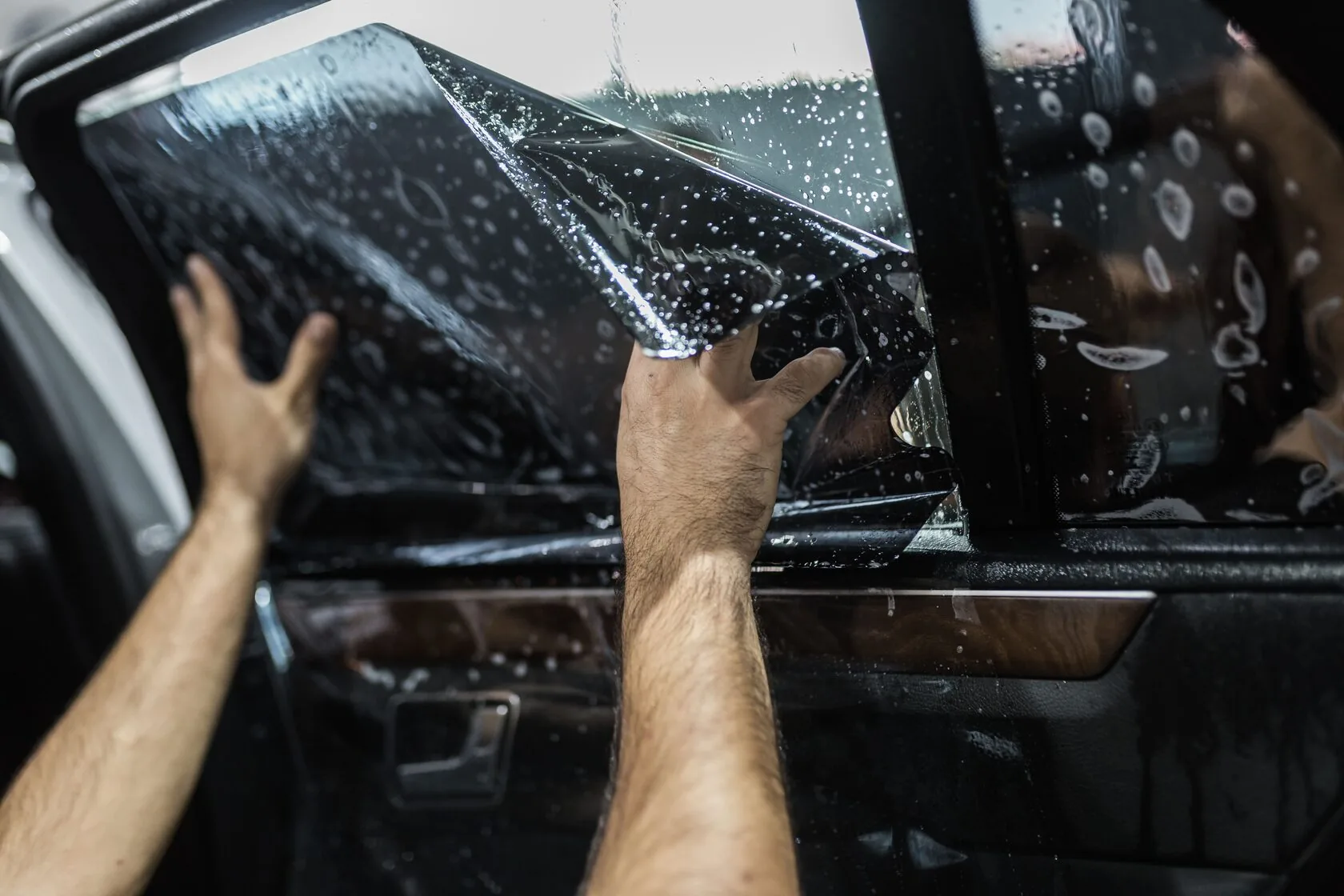
4. Installation

The film is then placed onto the prepared surface, aligned with specialized tools, and excess moisture and air are removed. This is the stage where the installer’s real experience becomes most visible.

5. Final Inspection

A good studio always checks the edges, looks for bubbles or dust contamination, and evaluates the final visual result before handing the car over. The client should also be told what is normal during the first days after installation.

What Is Normal After Installation

Tinted glass does not always look final immediately after the job is finished. In the first days, slight optical haze, traces of moisture, or mild cloudiness may be visible. This can be completely normal if the film has been installed correctly.

During the first few days, clients are usually advised to: - avoid rolling the treated windows down for a certain period; - avoid actively cleaning the inside surface; - avoid aggressive chemicals; - allow the film to settle fully.

A properly installed film gradually stabilizes and takes on its final appearance.

How to Care for Tinted Windows

Correct aftercare directly affects how long the film stays clean, attractive, and functional.

The most important rules are simple: - do not rush to clean the inside surface immediately after installation; - use soft microfiber only; - avoid harsh or ammonia-based chemicals; - do not use rigid scrapers or abrasive materials; - if you notice a lifting edge, bubble, or another visible defect, contact the same studio promptly rather than a random technician.

With proper care, the film keeps both its appearance and its practical effect for much longer.

Current Prices in Tbilisi

If pricing is your next question, the current public BESTAUTO starting rates for car window tinting are as follows:

  • rear side windows — from 130 GEL;
  • front side windows — from 130 GEL;
  • rear windshield — from 160 GEL;
  • front windshield — from 290 GEL.

The final price depends on the type of vehicle, glass size, selected film class, and job complexity. That is why the right approach is to first decide on the type of material and the real goal, and only then get an exact quote for your specific car.

Most Common Tinting Mistakes

The most common mistake is choosing only by darkness level. Appearance matters, but if you ignore film quality, real heat-rejection performance, installation cleanliness, and care requirements, disappointment is likely.

The second mistake is poor installation. Bad tint work usually starts causing problems within the first months: edges begin to lift, bubbles appear, dust gets trapped under the film, or the visual finish becomes uneven. Tinting is exactly the kind of service where both the material and the installer matter.

It is also a mistake to expect that any tint will solve every problem automatically. Tint improves comfort, sun protection, and privacy, but the result still depends heavily on choosing the correct film and having it installed properly.

Who Benefits Most from This Service

Window tinting is especially useful for drivers who: - drive around the city every day and often leave the car in the sun; - want a cooler, more comfortable cabin; - value greater privacy; - want the car to look more complete and refined; - are looking for a balanced mix of style and practical benefit.

If chosen correctly, tinting becomes not just a visual modification, but a real improvement in daily use.

Conclusion

Car window tinting fully justifies itself when both the film type and the installation quality are chosen correctly. Two cars may look similar from the outside while offering completely different levels of comfort, durability, and practical value. That is why the decision should not come down to “Do I want it darker or not?” It is far more important to understand your goal, how often you use the car, where it spends its time, and what kind of result you want to feel every day.

If you want a genuinely good result, tinting should be treated as both a technical and an aesthetic service. The right film, professional installation, and basic careful aftercare create a result that you notice not just on day one, but months later — in the cabin, on the road, and in the overall feel of the vehicle.

Order professional car window tinting

Our detailing studio gets things done to a good quality
Real reviews from our clients
Google Reviews
4.8 ★★★★★ (185)
View all reviews on Google
Why Choose Our Detailing Center?
You'll love the result
  • 5 Years of Detailing Experience
    Professional wrapping of hundreds of cars of different makes and models
  • 2 Studios in Tbilisi
    Guramishvili 78 and Anna Politkovskaya 51 — choose a convenient location
  • 2,000 Satisfied Clients
    Hundreds of reviews, 4.9★ rating on Google
  • 10-Year Film Warranty
    We cover peeling, yellowing, and material defects

Order professional window tinting

Our detailing studio will handle your task with quality

Book a consultation

Choose the nearest studio
for a free consultation

Free inspection, pre-consultation and booking for main services available at both locations

BESTAUTO Guramishvili
Tbilisi, Guramishvili Ave. 78
BESTAUTO Guramishvili

Tbilisi, Guramishvili Ave. 78

+995 550 000 299
Mon–Sat 10:00 – 20:00
Enter phone in international format: +995 5XX XXX XXX
Request sent!
We will call you back within 15 minutes.
Or call us: +995 550 000 299
BESTAUTO Saburtalo
Tbilisi, Anna Politkovskaya St. 51
BESTAUTO Saburtalo

Tbilisi, Anna Politkovskaya St. 51

+995 550 000 199
Mon–Sat 10:00 – 20:00
Enter phone in international format: +995 5XX XXX XXX
Request sent!
We will call you back within 15 minutes.
Or call us: +995 550 000 199
Chat on WhatsApp
Choose your studio
Guramishvili Studio
78 Guramishvili St
Saburtalo Studio
51 Anna Politkovskaya St
Book a Free Inspection