
Polishing Before Ceramic Coating: When It Is Essential — and When It Is Not

A practical explanation of whether polishing is required before ceramic coating, what prep is needed, and why polishing + PPF often makes more sense than polishing + ceramic alone.

One of the most common questions before applying ceramic coating is this: is polishing mandatory, or can the coating be applied directly with no additional correction? The short answer is: no, car polishing is not always mandatory. But in many real cases, it is so important that skipping it noticeably worsens the final result.

The problem is that many people see ceramic as a material that “fixes” the surface, hides swirl marks, and automatically makes the car look perfect. In reality, that is not how it works. Ceramic coating is primarily a protective and maintenance-enhancing layer: it boosts gloss, brings out color, improves hydrophobic behavior, and makes washing easier. But if the paint already has circular wash marks, slight haze, poor-wash defects, or other visible flaws, ceramic will not hide them. In good lighting, it often makes them more noticeable.

Why Ceramic Does Not Replace Polishing

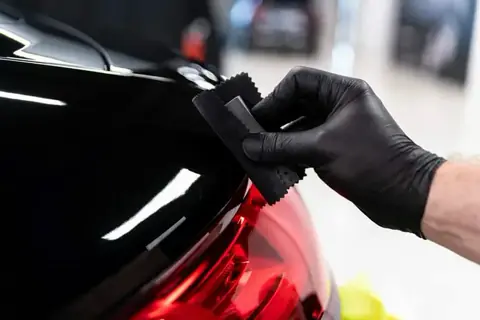
car ceramic coating is not paint correction. Its main purpose is to protect an already prepared surface and help preserve the achieved visual result. That is why polishing and ceramic coating serve different functions:

  • polishing works on the surface and improves its condition;
  • ceramic is applied over a prepared surface and helps preserve that result;
  • polishing reduces micro-scratches, circular wash marks, and light haze;
  • ceramic improves slickness, gloss, and ease of maintenance.

This is why the correct sequence matters so much. If the car has not been properly washed, decontaminated, and corrected where necessary, ceramic cannot deliver its best result. The protective layer may still be applied, but the final appearance, clarity, and overall refinement will not match what the owner expects.

When Polishing Before Ceramic Is Truly Essential

There are several situations where polishing before ceramic is practically mandatory.

1. The Surface Has Visible Circular Marks and Light Scratches

This is the most common case. The car may look clean, but under sunlight or strong shop lighting you can clearly see swirl marks, light circular washing traces, and surface marring. In this situation, applying ceramic directly is the wrong decision. The coating will simply lock in the current visual condition.

2. The Car Looks Dull and Tired

Sometimes the vehicle does not have deep scratches, but the surface no longer looks alive. The color has flattened, the clear coat no longer reflects cleanly, black looks grayish, and metallic paint has lost depth. In this case, a light or one-step polish often does much more for the final result than ceramic alone.

3. The Car Is New, but Not Perfect

“New cars do not need polishing” is one of the most common myths. In reality, even a brand-new vehicle may have transport marks, dealership wash damage, traces from shipping films, or bonded contamination. That is why surface inspection is always necessary before ceramic, even if the car has just come from the showroom.

4. The Owner Wants the Cleanest Possible Visual Result

Some clients are not only buying protection — they want the cleanest possible finish. If the goal is maximum gloss clarity, better reflections, and a more premium visual impression, ceramic should be applied over the best possible base. In that case, polishing is not just optional — it is part of the result.

When Ceramic Can Be Applied With Minimal Polishing or No Polishing

There are also cases where aggressive correction is not necessary. Ceramic may be applied with minimal polishing or almost no polishing when:

  • the car is truly in excellent condition;
  • the paint has no noticeable swirl marks under proper light;
  • the owner is mainly focused on easier maintenance, not visual perfection;
  • the goal is surface protection and hydrophobic behavior, not show-car correction;
  • only very mild finishing is required.

In other words, the right answer depends on the actual condition of the paint — not on a rigid rule.

What Proper Preparation Before Ceramic Includes
Safe Washing

The process always starts with a safe wash. Dirt, dust, and abrasive contamination must be removed properly so that they do not interfere with later steps.

Decontamination

Tar, iron fallout, resin, mineral residue, and other bonded contamination must be removed before coating. Without this step, the surface is not truly clean.

Surface Evaluation Under Correct Lighting

Paint should be assessed under proper lighting, not just outdoors or under random ambient light. This is the only way to see the real level of swirl marks, haze, and previous poor correction.

Choosing the Right Polishing Type

Not every car needs deep correction. Some need only a finishing step; some need a one-step correction; others require more serious work. The correct polishing strategy depends on paint condition and owner expectations.

Removing Oils and Residues

Before ceramic is applied, polishing oils and residues must be fully removed. Otherwise, the coating will not bond properly to the actual paint surface.

Which Type of Polishing Works Best Before Ceramic?
Light Polishing / Finishing

This is a good option when the surface is already in decent condition and only needs a light refinement before coating.

One-Step Polishing

This is one of the most practical scenarios. It improves gloss, reduces light defects, and creates a strong base for ceramic without excessive correction.

Deep Correction

This is needed only when the paint has more serious visible defects and the owner expects a much cleaner visual result. It should never be chosen just because “more is better.”

The Most Common Mistakes
Mistake 1: “The Car Is New, So Nothing Needs to Be Done”

New does not always mean flawless. Inspection is still required.

Mistake 2: “Ceramic Will Hide Everything”

It will not. Ceramic enhances a prepared surface — it does not replace correction.

Mistake 3: Overly Aggressive Polishing Without a Real Need

Unnecessary heavy correction is not a sign of professionalism. The safest route that delivers the target result is the correct one.

Mistake 4: Focusing Only on the Product, Not the Preparation

Many owners ask only which coating is being used. In practice, the quality of preparation often matters just as much as the product itself.

Polishing + Ceramic — or a Stronger Type of Protection?

It depends on the goal. If your priority is visual refinement, easier washing, and enhanced gloss, polishing + ceramic is often the ideal combination. But if your main concern is real physical protection from rock chips, highway damage, and everyday mechanical wear, ceramic is not enough on its own.

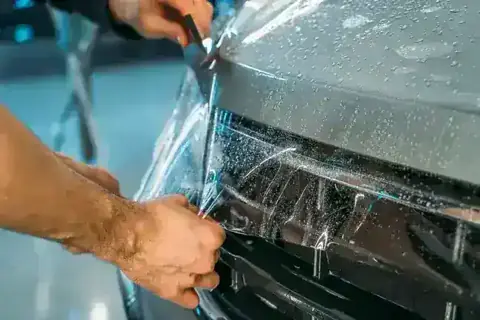
That is where ppf for car becomes the more logical option. Ceramic helps preserve appearance. PPF protects paint against actual impact and mechanical stress. They are not direct substitutes.

How to Tell What Your Car Needs

The right scheme depends on three things:

  • the actual condition of the paint;
  • the level of visual result you expect;
  • whether your priority is easier maintenance or stronger protection.

A well-kept car may only need light preparation before ceramic. A tired car may need one-step or deeper correction first. A highway-driven new car may actually be a stronger PPF candidate than a ceramic-only one.

What You Should Not Expect From Ceramic

Ceramic coating does not:

  • remove scratches by itself;
  • eliminate swirl marks;
  • hide poor reflections caused by bad paint condition;
  • replace paint correction;
  • protect against stone chips like PPF does.
Practical Conclusion

Polishing before ceramic coating is not mandatory in every single case — but in many real-world situations, it is the difference between an average result and a truly high-quality one.

If the paint has visible defects, polishing is not an optional bonus. It is part of the preparation that determines how the final coating will look. Ceramic works best when the base underneath is right. So the smartest strategy is never “ceramic as fast as possible,” but rather: assess the surface, prepare it correctly, and only then protect it.

Real reviews from our clients
Google Reviews
4.8 ★★★★★ (185)
View all reviews on Google
Why Choose Our Detailing Center?
You'll love the result
  • 5 Years of Detailing Experience
    Professional wrapping of hundreds of cars of different makes and models
  • 2 Studios in Tbilisi
    Guramishvili 78 and Anna Politkovskaya 51 — choose a convenient location
  • 2,000 Satisfied Clients
    Hundreds of reviews, 4.9★ rating on Google
  • 10-Year Film Warranty
    We cover peeling, yellowing, and material defects

Order professional polishing

Our detailing studio will handle your task with quality

Book a consultation

Choose the nearest studio
for a free consultation

Free inspection, pre-consultation and booking for main services available at both locations

BESTAUTO Guramishvili
Tbilisi, Guramishvili Ave. 78
BESTAUTO Guramishvili

Tbilisi, Guramishvili Ave. 78

+995 550 000 299
Mon–Sat 10:00 – 20:00
Enter phone in international format: +995 5XX XXX XXX
Request sent!
We will call you back within 15 minutes.
Or call us: +995 550 000 299
BESTAUTO Saburtalo
Tbilisi, Anna Politkovskaya St. 51
BESTAUTO Saburtalo

Tbilisi, Anna Politkovskaya St. 51

+995 550 000 199
Mon–Sat 10:00 – 20:00
Enter phone in international format: +995 5XX XXX XXX
Request sent!
We will call you back within 15 minutes.
Or call us: +995 550 000 199
Chat on WhatsApp
Choose your studio
Guramishvili Studio
78 Guramishvili St
Saburtalo Studio
51 Anna Politkovskaya St
Book a Free Inspection