It's an ideal environment and situation!
When an owner asks, “How often should I polish my car?”, they usually expect a simple answer: once a year, every two years, or “whenever needed.” In real life, there is no universal interval. Even two cars of the same model can need correction at very different times, because what matters is not age alone, but usage, washing habits, storage conditions, and whether the paint is protected.
Polishing is not just about “adding shine,” and it is not a procedure that should be repeated automatically as preventive maintenance. Its purpose is to correct visible defects on the clear coat: swirl marks, light scratches, holograms, hazing, and uneven reflection. The key principle is simple: a car should only be polished when the surface already shows real signs that correction is actually needed.
car polish service frequency always depends on the environment in which the car lives. A vehicle that mainly drives short city routes, is washed correctly, and is parked in a protected place will accumulate defects much more slowly than a car that goes out on the highway every day, drives on dusty roads, is washed improperly, or spends long hours under direct sun.
It is also important to remember that not all defects are the same. Sometimes the issue is limited to light surface swirls that are easy to correct. In other cases, the paint already has deeper scratches, signs of old improper polishing, marks from rough washing, or generally tired lacquer. That is why the right question is not “How many months should pass between polishing sessions?” but rather: “Does my car actually have defects that truly require correction?”
If the car is driven every day, spends a lot of time outdoors, and regularly moves between city driving and highway driving, the paintwork gets tired faster. Such cars pick up micro-marring more quickly, especially when they are constantly exposed to dust, rain residue, dry dirt, and abrasive particles from the road.
A car that is used less frequently and maintained carefully from the start usually stays in good shape much longer. That is why two cars of the same age can have completely different polishing needs.
In many cases, it is not the climate that accelerates the need for polishing, but improper washing. A harsh sponge, dirty microfiber, fast low-quality car washes, brushes, and poorly rinsed accessories gradually leave fine circular marks. These are especially visible on black, dark blue, dark gray, and other dark colors.
If the car is washed properly, defect build-up slows down significantly. That is why talking about polishing frequency without evaluating washing quality is almost always pointless.
For Tbilisi and Georgia in general, the following factors matter a lot:
If a car often stays under the open sky, hazing, water spots, and general visual fatigue appear more quickly. Imported cars may already carry signs of previous uneven correction, and that also affects how often they will need polishing later.
ceramic coating simplifies maintenance, improves hydrophobic behavior, and helps the surface hold less dirt. That has a positive effect on appearance and can reduce the need for frequent correction to a certain degree. But ceramic does not create a physical barrier against chips, deep scratches, and other damage that directly hits the paint.
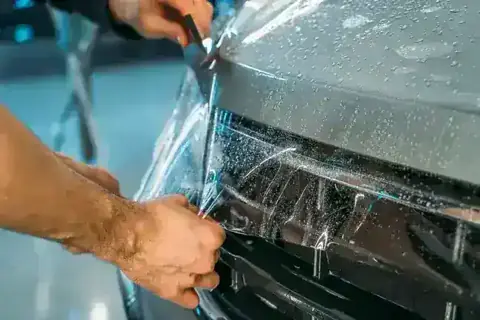
ppf wrap works differently. It is not just a coating that makes washing easier — it is a true protective layer on the most exposed panels. That is why polishing is typically needed far less often on areas protected with PPF. If your priority is not only gloss but real protection, PPF remains the more reliable solution.
In the Georgian climate, automotive paintwork lives under fairly heavy stress. In the city, the car constantly collects dust and dry contamination. On the highway, the front end sees more impact. In the mountains, the environment becomes even harsher. In summer, the sun makes every visual defect more obvious, especially if the surface already has fine scratches and water spotting.
Many owners assume the answer is simply to polish the car more often. In practice, it is smarter to first reduce the sources of the problem: improve washing, build a proper care routine, protect the body in time, and cover the most vulnerable zones. That is why the question “How often should I polish?” almost always leads to a more practical one: “How can I make sure I need polishing less often?”
| Scenario | What happens to the surface | Need for polishing |
|---|---|---|
| No noticeable protection | The paint takes all daily stress, wash marks, dust, and minor mechanical contact directly | Appears sooner, once visible defects build up |
| Ceramic coating only | Maintenance becomes easier, the body washes more easily, and the car keeps a cleaner look longer | Less often, but there is still no true physical protection from serious damage |
| PPF on key zones | The most exposed panels gain physical protection | Much less often, especially on the areas that usually suffer first |
The conclusion is simple: if the car is unprotected, polishing will be needed sooner or later. If it only has ceramic, keeping it looking good is easier, but high-risk zones remain vulnerable. If the front and heavily loaded panels are protected with PPF, the problem shows up far less often there.
The best indicator is not the calendar, but the condition of the surface. Typical signs that polishing is needed include:
Another important sign is when the car is clean but still looks “tired.” In that case the surface is already reflecting light poorly, and the color no longer looks alive. This is exactly where professional correction works best.
Polishing should not become a habit just because “I like a glossy finish.” If the body has no visible defects and the paintwork is in good condition, unnecessary correction is not the right strategy. Correction should always be justified.
It is also important to understand that polishing does not replace protection. If the vehicle constantly gets new micro-damage from poor washing, heavy use, or unprotected front-end panels, regular polishing does not solve the underlying issue — it only temporarily improves the appearance. In such cases, you first need to control the cause and only then correct the result.
If the owner keeps running into the same issue — front-end marks, fast loss of gloss, constant desire to correct the finish again — it makes sense to look not only at the cost of a single procedure, but at the overall strategy.
According to current BESTAUTO pricing, body polishing starts from 690 GEL, and body polishing + ceramic coating starts from 990 GEL. At the same time, PPF on the main front-end risk zones — hood, front bumper, headlights, and pillars — starts from 2500 GEL, while full-body PPF starts from 7500 GEL.
That does not mean every car automatically needs full PPF. But if the car often drives on highways, factory paint retention matters, and you do not want to keep returning to the same visual issues, this is exactly where PPF starts to look far more rational. Polishing restores the look; PPF helps make sure that look lasts longer and that new damage appears less often.

This is the single most important point. Most defects do not appear “by themselves” — they come from improper contact with the paint.
If you avoid brush-type automatic washes and rough manual washing, the surface will remain in better shape much longer.
Bug residue, bird droppings, tree sap, and mineral spotting should not stay on the paint for long, especially in summer and under direct sun.
Ceramic coating works well if your goal is easier washing, a cleaner visual effect, and reduced dirt adhesion.
If your main goal is not just gloss but reduced mechanical damage and maximum paint preservation, PPF is the most logical choice.
Not automatically. If the paint still looks healthy and has no defects that truly require correction, annual polishing just for the sake of routine is not the best approach.
No. Ceramic may reduce how often polishing is needed, but it does not make correction irrelevant forever.
Not completely, but it often reduces the need significantly on protected panels. Unprotected areas may still require correction later.
They do not necessarily need it more often in theory, but defects show up much faster on dark paint, so owners usually notice the need sooner.
Yes. A new car can still have transport marks, dealership wash damage, haze, or light defects that are worth correcting before protection.
There is no single calendar-based answer to how often a car should be polished. The right interval depends on how the vehicle is used, how it is washed, where it is parked, and whether it has ceramic or PPF protection.
The smartest approach is simple: do not polish by habit — polish when the paint actually shows signs that correction is needed. And if your goal is not just to restore appearance but to keep the paint in better condition for longer, the real answer is often not “more frequent polishing,” but better washing habits, smarter maintenance, and proper protection.
It's an ideal environment and situation!
Excellent detailing! I used BestAutoDetailing – they did everything very quickly and very well, completing the job in just three days. The car was delivered in perfect condition, and their attention…
Professionalism and a comfortable environment together are rare today👌 My recommendation to the entire team..Thank you ✊
⭐⭐⭐⭐⭐ Excellent Detailing! I’m extremely impressed with the full detailing on my car. The team did an outstanding job. The interior is spotless and refreshed, with every detail carefully cleaned and…
Very good service, they arrived earlier than I expected and most importantly they did a very high quality job.
They have very good service and attentive staff. The price is definitely appropriate for the quality. My recommendation ❤️✌️
Amazing job done by the guys! Car looks fresh like from a dealership! Thank you very much!
Thank you, I liked it, everything was done perfectly 10/10
All the way from Romania 🇷🇴 it's my first time writing a review, i don't usually trust people easily but I felt really comfortable dealing with this team since day one, very professional, very…
I had a polishing service and applied stickers. I am very satisfied with the result — the car looks perfect. They work with quality, attention and professionalism. I definitely recommend them 👍
I've been using Best Auto for a long time and have trusted them with dozens of my cars. These guys are true professionals and simply great people! They do everything at the highest level, and the…
Excellent service! Polite and attentive staff. The guys are masters of their craft. They did the job with great attention to detail and on time. As a bonus, they did some extra work without raising…
Bestauto Detailing delivered a true showroom finish on my Tesla Model Y. The paint now has a deep, mirror gloss, the wheels and glass are spotless, and the interior feels refreshed—everything simply…
Excellent service. I needed my car polished and the interior dry-cleaned. They explained everything clearly, pointed out areas where polishing might not help, and gave me a discount on the…
Our detailing studio will handle your task with quality
Book a consultationBook a visit
Write your phone number, we will call you back and tell you everything about the service you are interested in
Free inspection, pre-consultation and booking for main services available at both locations