
Contactless and hand car wash are both labelled "safe" methods — as opposed to brush-tunnel automatics that leave the famous swirl-mark web on the paint. But there is a difference between them too, and it is not always in favour of contactless. Safe washing is not a question of the method in general but of the right chemistry, the right tool and the right sequence. Below: where contactless actually saves the paint, where it loses to hand washing, what risks each carries, and which approach BESTAUTO uses on ceramic- and PPF-coated cars.
A contactless wash is a cycle where neither a mitt, nor a brush, nor a sponge touches the body. Dirt is removed by chemistry and pressurised water alone. Minimal contact with the paint is the single core idea of the method.
Standard sequence:
Throughout the process no physical tool touches the body. Self-serve tunnels implement this with a high-pressure gun, professional detailing studios with a foam cannon and controlled pressure.
The main advantage of the method — zero risk of new contact scratches. If sharp particles (metallic dust, sand, salt) sit in the grime, a contactless wash leaves them in place or sends them off with the pressure jet, not smearing them across the paint.
A hand wash is what a professional studio calls a detailing wash: foam pre-wash, then a microfibre Plush mitt over the body with pH-neutral shampoo, rinse, dry. This is the method BESTAUTO uses as the base.
A hand wash by itself does not create scratches — a long-pile mitt physically glides across the paint on the soap film as if on a lubricant. The problem appears when any component is broken:
If every component is in place, a hand wash does not create new scratches. If not, it does — and then contactless turns out to be safer in practice.
A self-serve contactless wash under open sky has three real risks that marketing avoids.
Aggressive chemistry. For chemistry to remove dirt without physical contact, it has to be strong. Self-serve stations usually run an alkaline compound at pH 11-13 — 10-100× more alkaline than a pH-neutral detailing shampoo. That chemistry softens the top clearcoat layer, strips ceramic hydrophobic behaviour in 2-3 washes, softens the PPF adhesive layer. On a new car or one with a protective coating it is direct harm.
High-pressure jet too close. 150+ bar at under 30 cm distance physically damages paint, especially around seals, trim, emblems, rubber gaskets. Visible effects — torn adhesive, lifted trim, damaged glass nano-coatings. At self-serve stations customers often hold the gun closer than they should because they do not know the safe distance.
Dirt is not fully removed. Contactless handles surface dirt well — dust, pollen, light road film. On embedded spots (bird droppings, tree sap, tar, summer insects) chemistry alone cannot cope — physical action is needed. Result: after a contactless wash the car is "generally clean", but certain spots remain. Either extend dwell time (more clearcoat harm) or wipe by hand afterwards (and then the contactless idea is gone).
At a self-serve wash in Tbilisi the customer usually decides how many foam passes to make and how long to hold the pressure. Without experience the result is worse than a studio detailing wash, while the paint risk is higher.
Three scenarios where contactless is the right pick.
Winter at sub-zero temperatures. Snow, salt, ice on the body. Contact methods in winter are risky: even a soft mitt gets stiff at freezing (water in the pile freezes, pile hardens), plus salt in the pile becomes a ready abrasive. Contactless is the only safe option in those conditions. Professional studios in Tbilisi include a contactless stage as primary during winter.
On a very dirty car before a detailing wash. If the car returned from a mountain trip covered in dirt, a contactless pre-wash removes 80% of contamination. After that the regular hand phase begins — mitt work is safe because the bulk of grit is already flushed away.
On a ceramic coating younger than a month. In the first 2-4 weeks after ceramic application the coating is still curing — physical contact is discouraged. Contactless with pH-neutral chemistry is the optimum during this window.
On fresh PPF — up to 10 days after installation. Same 7-10 days of adhesive curing, same restrictions. Contactless (chemistry and water only) without touching the film is safer than hand washing.
In all these cases the rules matter: chemistry must be neutral (not a self-serve station running alkali), pressure must be reasonable (not closer than 30 cm to the body).
Four scenarios where a hand wash delivers what contactless cannot.
Embedded spots. Tree sap, road tar, insect residue after a mountain trip, water spots with limescale. Chemistry alone cannot cope — a microfibre mitt with soap film is needed to physically peel the spot.
Dark unprotected cars. Black and dark-blue colours without ceramic show paint blotchiness fast under contactless alkali — uneven gloss, matte patches. A hand wash with neutral shampoo gives uniform results without those side effects.
Daily city dust. In Tbilisi urban dust settles densely and in patches. Contactless removes surface dust but some stays in the clearcoat micropores. A hand wash with a soap film pulls dust out cleaner.
Summer work in shade. In 35°C summer alkaline contactless chemistry dries on paint within 20 seconds leaving white streaks. A hand wash inside a temperature-controlled bay is safer.
At BESTAUTO the base wash is hand washing with the two-bucket method (detailing wash). The contactless phase is added as a pre-wash ahead of hand washing on very dirty cars or in special conditions (ceramic under a month, PPF under 10 days, winter conditions).
Structure of the mixed approach:
This approach uses the strong side of both methods: the contactless phase removes bulk dirt without contact, the hand phase finishes what chemistry cannot reach. Risks on both sides are minimised because:
On a PPF-coated car neutral pH is especially important — without it the film yellows at the edges within a year. More on the chemistry requirements of PPF paint protection film.
BESTAUTO pricing for a car wash is the same regardless of whether a contactless phase is included — it is not a separate service but part of the procedure on dirty cars:
A pure contactless self-serve wash in Tbilisi is cheaper than a studio one — but with the risks outlined above. The price gap is justified by paint preservation: after a few dozen self-serve washes paint blotchiness appears, and treating that (car polishing from 690 ₾) costs more than was saved on washes.
The final figure for your car is set on inspection — size, body condition, presence of ceramic or PPF. Full pricing — on the car wash service page.
Depends on conditions. Contactless is safer in two cases: a very dirty car (until grime is flushed away, a mitt just smears it) and fresh coatings (ceramic under a month, PPF under 10 days). Hand washing is safer in all other cases — if done right: neutral shampoo, microfibre mitt, two-bucket method, grit guard. If technique is broken, a hand wash becomes more dangerous than contactless.
In the first 2-4 weeks after ceramic application — yes, that is the recommended regime. After that — no, contactless alone cannot reach deep dirt and its chemistry (if alkaline) harms ceramic. Optimum for stable ceramic is the mixed approach: contactless pre-wash + hand wash with two-bucket method and pH-neutral shampoo.
Cheaper because there is no technician — the customer does it. Is it worth using: rarely and only for emergency cleanup (returning from a mountain road, bird dropping on the hood, urgent). For regular washing — no: alkaline chemistry, uncontrolled pressure, shared equipment accelerate paint wear. The gap to a studio wash is paid back within a year through paint preservation.
100-120 bar at 30+ cm distance — detailing wash standard. 150+ bar at under 20 cm — dangerous for seals, trim, glass nano-coatings, PPF adhesive seams. Self-serve stations often run at 160-180 bar — a customer may not know and hold the gun close, damaging the body.
Yes, with conditions. On stable film (older than a month) — pressure no higher than 120 bar, distance from film edge no closer than 40 cm, avoid directing the jet at edges and seams. On fresh PPF (first 10 days) — only light rinsing without high pressure. Film edges are the most vulnerable point; a jet aimed at an edge at close range can lift the film over several months of regular washes.
Contactless and hand wash are not opposites but complementary techniques. Contactless wins on a very dirty car, in cold weather, on fresh coatings — wherever direct physical contact creates risk. Hand wash wins where the result needs to reach spot-free cleanliness, where embedded contamination has to come off, where dark colour has to stay side-effect free. Contactless alone does not guarantee safety — if chemistry is alkaline and pressure uncontrolled, it is worse than a careful hand wash. Hand washing alone does not guarantee safety either — if the mitt is dirty and the bucket is one, it creates a swirl web faster than a brush tunnel.
In a detailing studio both are implemented correctly: contactless pre-wash removes the bulk of grit, the hand two-bucket phase finishes spot-free. That is safe washing in practice.
Key takeaways:
Book a detailing wash at BESTAUTO via the form on the service page, or call whichever studio is closer in Tbilisi, Georgia:
Both studios are open Monday to Saturday, 10:00–20:00. On inspection the technician decides whether a contactless pre-wash is needed and which hand-wash phase matches the car's condition.
Then comes careful washing. Its purpose is to remove dirt without creating new defects. This is one of the key differences between standard washing and detailing logic: rough contact, poor towels, and aggressive brushes often damage the appearance instead of helping it.
Even after washing, invisible contamination often remains on the surface: tar, sap, iron particles, and embedded residue. These are removed with the right chemical and, when needed, mechanical decontamination. This stage matters because neither polishing nor protective coatings perform properly on an unprepared surface.
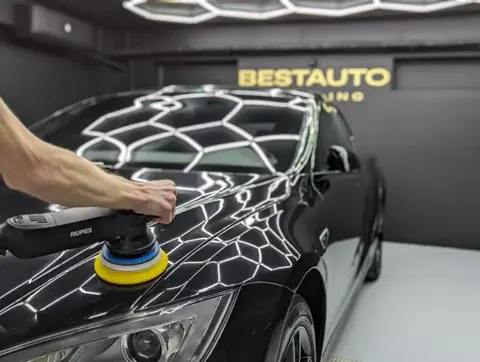
If the paint looks tired, hazy, scratched, or uneven, polishing becomes the stage that restores clarity and reflection. The intensity of correction depends on the actual condition of the lacquer. Sometimes a light enhancement is enough. In other cases, a more involved correction is justified.
Once the surface has been corrected, it is cleaned again so that any chosen protection can be applied to a properly prepared base. This is where long-term quality really begins.
Exterior detailing can include:
The exact set depends on the vehicle’s condition and on the owner’s goals.
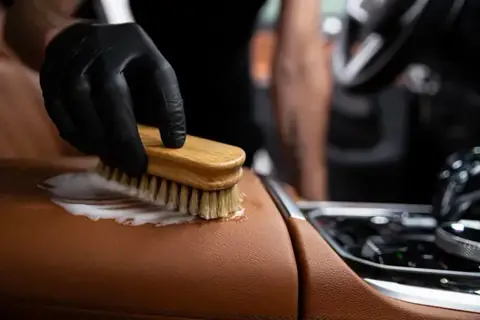
Interior detailing typically includes:
The goal is not just to make the cabin look clean at first glance, but to reset the environment more deeply and more correctly.
Wax is the simplest and shortest-term option. It can improve shine and water behavior, but it is not a serious long-term protection strategy.
Sealants usually last longer than wax and can provide a more stable maintenance benefit, but they still sit below ceramic coatings and PPF in terms of overall protection logic.
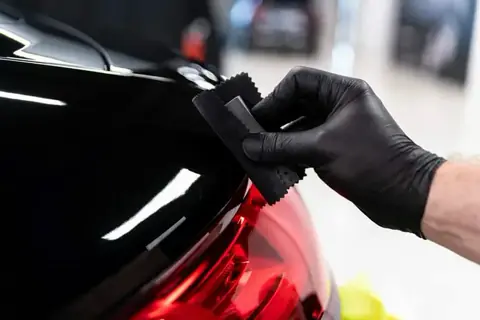
Ceramic coating is primarily about stronger gloss, easier washing, better hydrophobic behavior, and more stable daily appearance. It is very useful for maintenance and visual preservation, but it is not a true shield against chips and road impact.
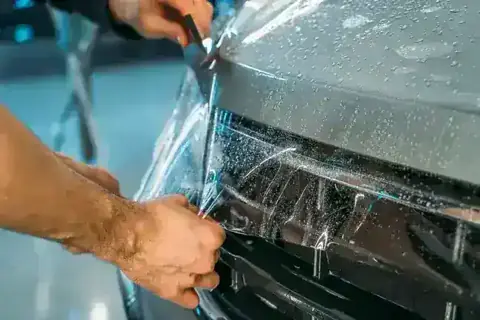
PPF is the most serious option when the goal is real physical protection. It helps protect the paint from chips, light abrasion, road debris, and daily mechanical stress. If the vehicle is new, valuable, heavily used, or the owner wants to preserve the original finish, PPF is usually the most rational solution.
Georgia creates a demanding environment for cars. Strong sun, dusty roads, mixed urban and highway use, mountain routes, seasonal contamination, and inconsistent wash quality all make professional care more relevant. A car that is left without proper care in these conditions will almost always age visually faster.
A good studio is not defined only by nice photos. You should look at the workspace, lighting, preparation standards, product transparency, real before/after examples, and how clearly the team explains what is actually needed for your car.
The result of detailing depends not only on the studio, but also on what happens afterward. Safe washing, the right chemicals, soft contact methods, and reasonable maintenance intervals all help the result last longer. Poor aftercare can quickly undo even very good work.
The cost always depends on the service itself, the vehicle’s size, its condition, and the final goal. A basic safe wash, interior deep cleaning, paint correction, ceramic coating, and PPF are not services of the same class, so the pricing logic is naturally different.
Basic care is absolutely possible at home, but once we are dealing with polishing, ceramic coating, or especially PPF, the results depend heavily on tools, lighting, prep, and experience.
There is no single universal schedule. It depends on use, storage, washing habits, and the level of protection already present on the car.
A high-quality clear PPF installation is usually visually unobtrusive, especially when edges and fitment are done properly.
Yes, when done correctly, PPF can be removed and replaced. That is one of its major long-term advantages.
Detailing is not just about making a car look attractive for a short time. It is a structured approach to keeping the vehicle cleaner, fresher, more comfortable, and better protected over time. Exterior care, interior care, and the right protection all work together.
If your goal is only a quick visual refresh, many simpler services can help. But if you want a truly well-kept car in Georgia’s real-world conditions, then proper detailing — and especially the right protection strategy — becomes one of the smartest investments you can make in the vehicle.
Our detailing studio will handle your task with quality
Book a consultationBook a visit
Write your phone number, we will call you back and tell you everything about the service you are interested in
Free inspection, pre-consultation and booking for main services available at both locations