
Car Detailing in Tbilisi: A Complete Guide to Exterior and Interior Care
For many people, detailing is still associated with nothing more than “a good wash,” but in reality it is a much broader and more professional approach to vehicle care. It combines deep cleaning, surface restoration, visual improvement, and the correct choice of protective solutions. Its purpose is not to make the car look nice for a single day. The real goal is to help it stay clean, fresh, well-kept, and protected for as long as possible.
If a car is used every day in Tbilisi, on highways, or on mountain roads, both the body and the interior are constantly under stress. Dust, sand, fine gravel, strong sun, mineral residue after rain, tree sap, bird marks, and aggressive chemicals gradually affect both the paint and the cabin materials. That is why professional detailing is not one-time “cosmetics,” but a deliberate care strategy.
- what detailing is and how it differs from a regular wash;
- what exterior and interior detailing include;
- what the correct work sequence looks like;
- how wax, sealant, ceramic coating, and PPF differ;
- why PPF is the strongest form of body protection;
- what the main detailing services cost in Tbilisi;
- how to care for a car after detailing.
Detailing is deep, precise, multi-stage care for a vehicle, where attention is paid to every detail. It is not just about washing the body. It includes assessing surfaces, removing contamination correctly, correcting minor visual defects, and selecting a protective solution that truly fits your vehicle and your use case.
Proper detailing usually combines three major directions:
- exterior detailing — care for the body, glass, wheels, plastic trim, and other exterior elements;
- interior detailing — deep cleaning of the cabin, leather, textile, plastics, and interior glass;
- protection — choosing a layer that helps preserve the result for longer.
That is exactly why detailing differs from a quick car wash. Speed and flow are not the priority here. Precision, the right tools, safe chemicals, strong lighting, and process control are.
Everything starts with inspecting the car. The specialist evaluates what type of contamination is present, whether there is tar, sap, iron fallout, water spotting, micro-scratches, holograms, oxidation, or other issues. At this stage it becomes clear whether the car needs only deep cleaning, light visual refreshing, or actual corrective polishing.
Then comes careful washing. Its purpose is to remove dirt without creating new defects. This is one of the key differences between standard washing and detailing logic: rough contact, poor towels, and aggressive brushes often damage the appearance instead of helping it.
Even after washing, invisible contamination often remains on the surface: tar, sap, iron particles, and embedded residue. These are removed with the right chemical and, when needed, mechanical decontamination. This stage matters because neither polishing nor protective coatings perform properly on an unprepared surface.
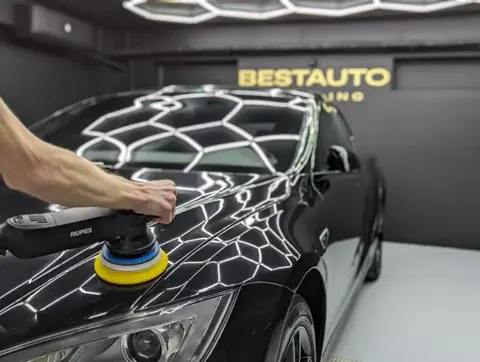
If the paint looks tired, hazy, scratched, or uneven, car polishing becomes the stage that restores clarity and reflection. The intensity of correction depends on the actual condition of the lacquer. Sometimes a light enhancement is enough. In other cases, a more involved correction is justified.
Once the surface has been corrected, it is cleaned again so that any chosen protection can be applied to a properly prepared base. This is where long-term quality really begins.
Exterior detailing can include:
- safe hand washing;
- wheel and tire cleaning;
- decontamination;
- paint inspection;
- polishing;
- glass treatment;
- trim care;
- application of wax, sealant, ceramic coating, or PPF.
The exact set depends on the vehicle’s condition and on the owner’s goals.
Interior detailing typically includes:
- thorough vacuuming;
- deep cleaning of textiles or leather;
- treatment of plastics and trim;
- cleaning of difficult areas such as seams, rails, and vents;
- interior glass cleaning;
- odor removal or ozone treatment when needed;
- interior protection solutions such as ceramic coating for high-contact areas.
The goal is not just to make the cabin look clean at first glance, but to reset the environment more deeply and more correctly.
Wax is the simplest and shortest-term option. It can improve shine and water behavior, but it is not a serious long-term protection strategy.
Sealants usually last longer than wax and can provide a more stable maintenance benefit, but they still sit below ceramic coatings and PPF in terms of overall protection logic.
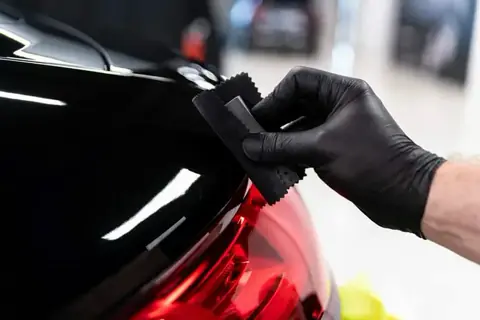
ceramic coating is primarily about stronger gloss, easier washing, better hydrophobic behavior, and more stable daily appearance. It is very useful for maintenance and visual preservation, but it is not a true shield against chips and road impact.
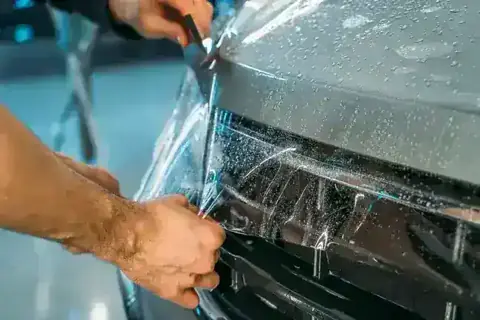
ppf wrap when the goal is real physical protection. It helps protect the paint from chips, light abrasion, road debris, and daily mechanical stress. If the vehicle is new, valuable, heavily used, or the owner wants to preserve the original finish, PPF is usually the most rational solution.
Georgia creates a demanding environment for cars. Strong sun, dusty roads, mixed urban and highway use, mountain routes, seasonal contamination, and inconsistent wash quality all make professional care more relevant. A car that is left without proper care in these conditions will almost always age visually faster.
A good studio is not defined only by nice photos. You should look at the workspace, lighting, preparation standards, product transparency, real before/after examples, and how clearly the team explains what is actually needed for your car.
The result of detailing depends not only on the studio, but also on what happens afterward. Safe washing, the right chemicals, soft contact methods, and reasonable maintenance intervals all help the result last longer. Poor aftercare can quickly undo even very good work.
The cost always depends on the service itself, the vehicle’s size, its condition, and the final goal. A basic safe wash, interior deep cleaning, paint correction, ceramic coating, and PPF are not services of the same class, so the pricing logic is naturally different.
Basic care is absolutely possible at home, but once we are dealing with polishing, ceramic coating, or especially PPF, the results depend heavily on tools, lighting, prep, and experience.
There is no single universal schedule. It depends on use, storage, washing habits, and the level of protection already present on the car.
A high-quality clear PPF installation is usually visually unobtrusive, especially when edges and fitment are done properly.
Yes, when done correctly, PPF can be removed and replaced. That is one of its major long-term advantages.
Detailing is not just about making a car look attractive for a short time. It is a structured approach to keeping the vehicle cleaner, fresher, more comfortable, and better protected over time. Exterior care, interior care, and the right protection all work together.
If your goal is only a quick visual refresh, many simpler services can help. But if you want a truly well-kept car in Georgia’s real-world conditions, then proper detailing — and especially the right protection strategy — becomes one of the smartest investments you can make in the vehicle.
- 5 Years of Detailing ExperienceProfessional wrapping of hundreds of cars of different makes and models
- 2 Studios in TbilisiGuramishvili 78 and Anna Politkovskaya 51 — choose a convenient location
- 2,000 Satisfied ClientsHundreds of reviews, 4.9★ rating on Google
- 10-Year Film WarrantyWe cover peeling, yellowing, and material defects
Order professional detailing
Our detailing studio will handle your task with quality
Book a consultationBook a visit
Write your phone number, we will call you back and tell you everything about the service you are interested in
Choose the nearest studio
for a free consultation
Free inspection, pre-consultation and booking for main services available at both locations
Tbilisi, Guramishvili Ave. 78
+995 550 000 299Or call us: +995 550 000 299
Tbilisi, Anna Politkovskaya St. 51
+995 550 000 199Or call us: +995 550 000 199